

THE COLLECTION | The Comb That Pointed North (Part 1)
How a London Basement Turned Ordinary Objects into WWII's Most Elegant Escape & Evasion Kit

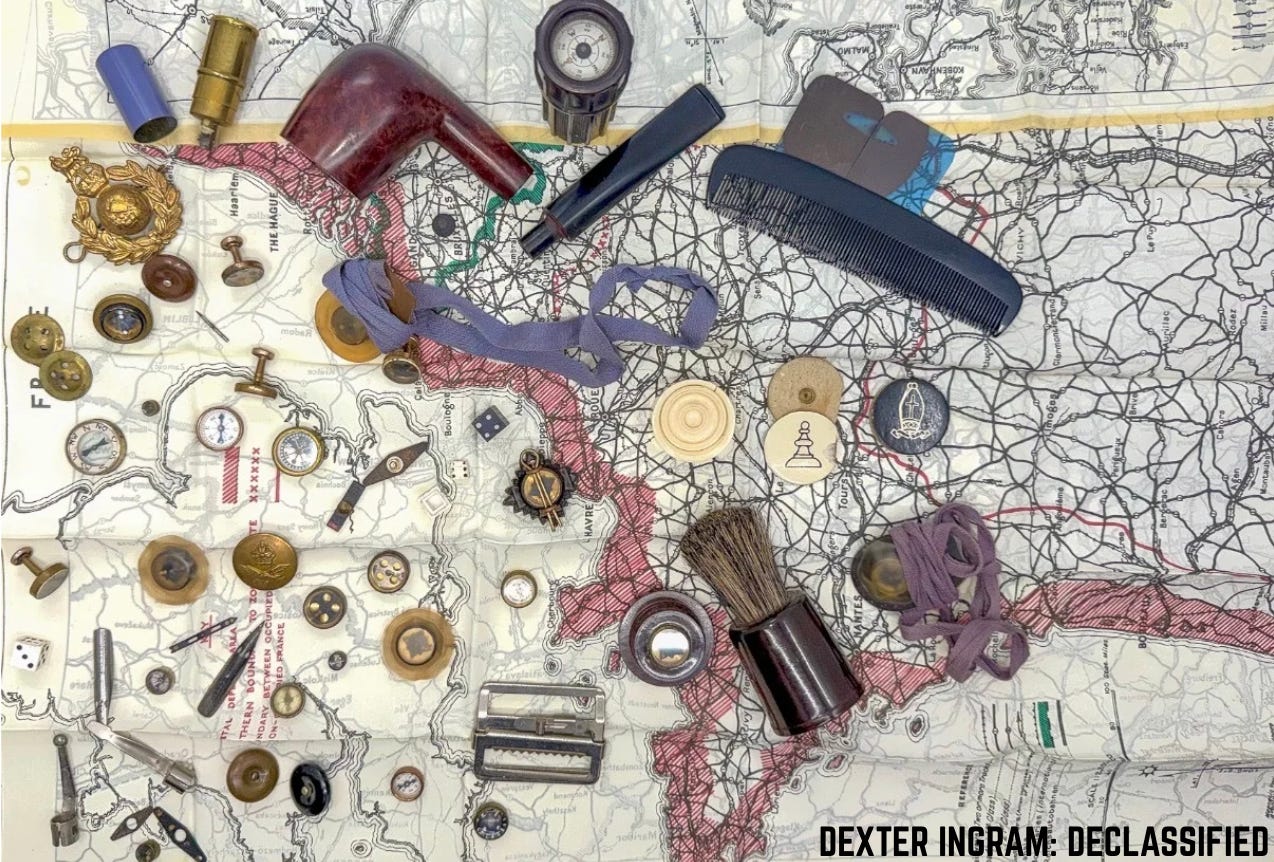
On the night of January 5, 1942, a British officer named Airey Neave walked out of Colditz Castle in a German uniform he’d cobbled together from a stolen tunic, a forged ID, and a costume he’d lifted from the Polish prisoners’ theater group. In his pocket sat a small compass, a silk map of southern Germany sewn into his coat lining, and a wad of forged Reichsmarks tucked under his cap.
Four days later he crossed into Switzerland on foot.
Neave was the first British officer to make a “home run” from Colditz. When he got back to London, he walked into MI9’s headquarters and went to work for the man who’d designed the gear that helped him out.
That gear’s what you’re looking at.
The Magician in the Basement
MI9 needed someone to design an escape kit. They hired a stage magician.
Christopher Clayton Hutton, Clutty to anyone who knew him, was past military age, rejected by the RAF, and parked in a basement office at a London hotel in 1939 with one job: figure out how to slip escape gear into POW camps without the Germans noticing.
Clutty’s whole career was built on misdirection. You don’t sneak something past a guard. You hand him something he’s already trained to ignore.
Every man this gear got home was a pilot or a saboteur the Germans now had to face all over again.
The Button Knew the Way
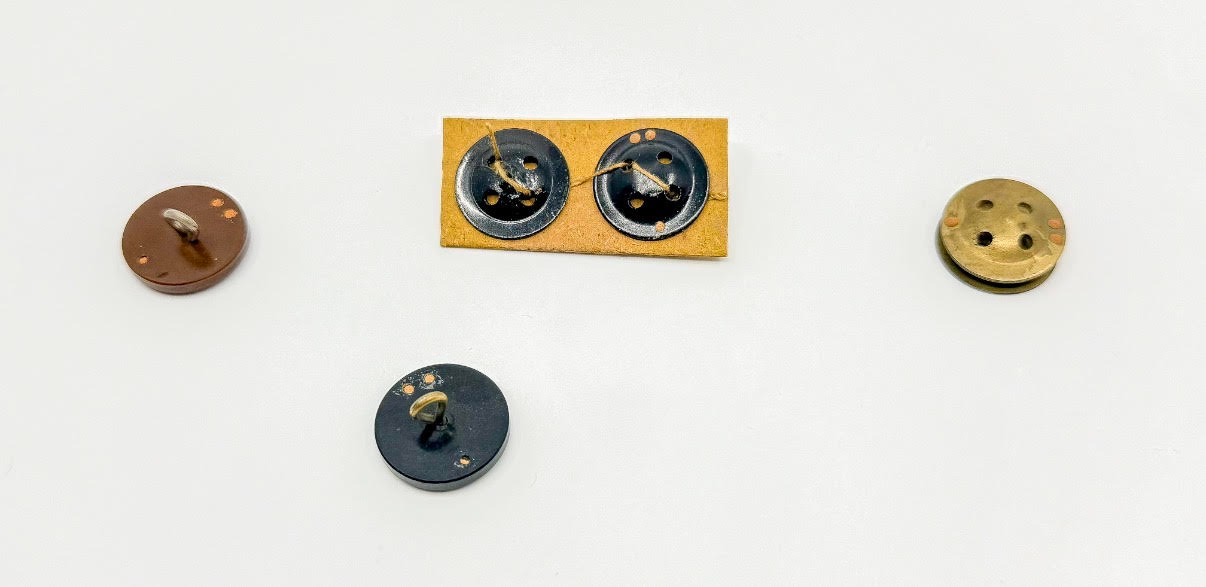
Look at the buttons across the top of the spread. They’re real buttons, sewn onto real tunics and overcoats. They’re also compasses.
From the outside, a button looked like exactly what it was supposed to look like, brass on a military tunic, bone on a workman’s coat, plain plastic on a Frenchman walking through Lyon. A German guard inspecting the uniform of a captured airman would feel them, count them, and move on.
Inside each one was a tiny magnetized needle on a pivot. The button still buttoned. The compass still pointed north. The trick was that nobody on the wrong side of the wire ever had reason to look twice.
You can see several variants of black, brown, and brass military buttons in the photos.
Tradecraft in a Gentleman’s Pocket
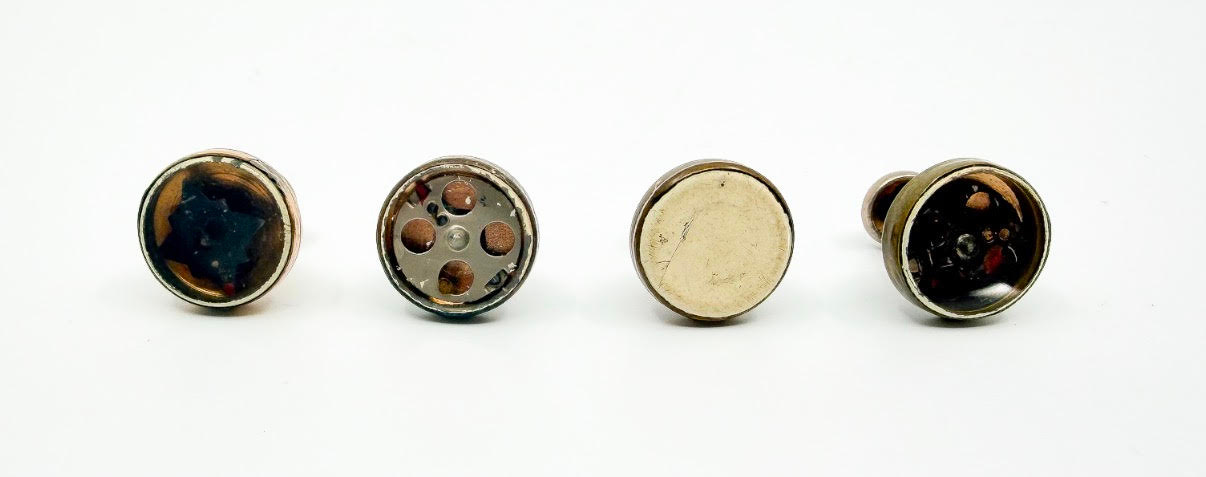
The brass pieces shaped like tiny dumbbells are collar stud compasses. Collar studs were everyday menswear in the 1930s and 40s, the small fasteners men used to hold detachable shirt collars onto their shirts every morning. Anybody dressing for travel in occupied Europe had a few rattling around in his pocket without thinking about it. The Germans wouldn’t have given them a second look. Inside the disc on each one was a working compass. A few of these came out of the OSS shop in Washington, where MIS-X, the American counterpart to MI9, ran its own concealment program off the books.
The dark pipe is made of briarwood. It’s a real pipe, the kind a man would actually smoke. The bowl was hollowed out and the stem unscrewed, opening up enough room for a small compass, a tightly rolled silk map, currency, or a few benzedrine tablets. A captured pilot might surrender his pipe to a guard during interrogation and get it handed back. What good’s a pipe to an interrogator?
The pencil works the same way. Pull the eraser end and there’s a compass.
The Belt That Got You Home
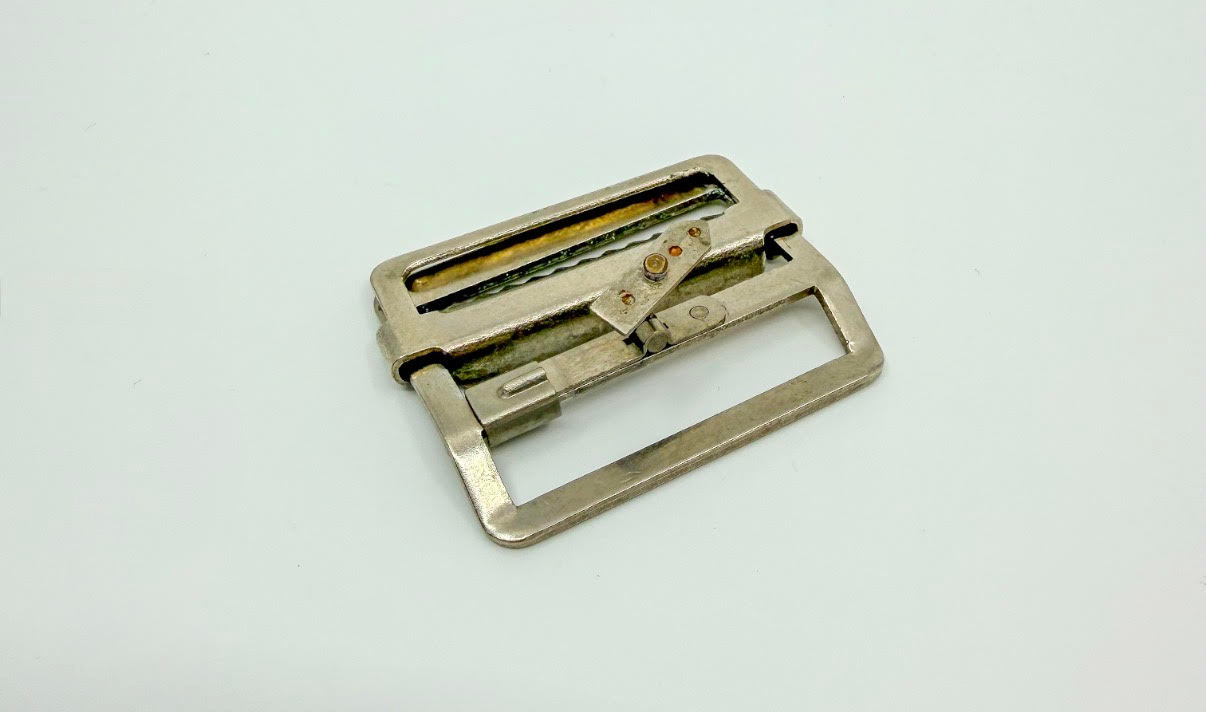
The steel belt buckle on the map is an MI9 escape buckle, made to issue on the British Army’s Battle Dress waist belt. From the outside it’s regulation. The kind of buckle a soldier fastens in the morning and forgets by lunch.
Inside, in stowed form, are the parts of a working compass. A magnetized needle. A pivot spike. Both built right into the buckle frame.
When a man needed to know which way to run, he’d take the buckle apart, balance the needle on the spike, and let it swing to north. Two dots on the needle marked the front, one on the back. The same dot convention ran across the whole MI9 catalog of magnetized objects, so a prisoner who’d handled one of these pieces already knew how to read the next one.
The Germans handled the buckle every time they searched a prisoner. They never figured out what they were looking at.
The Comb You’d Break to Run
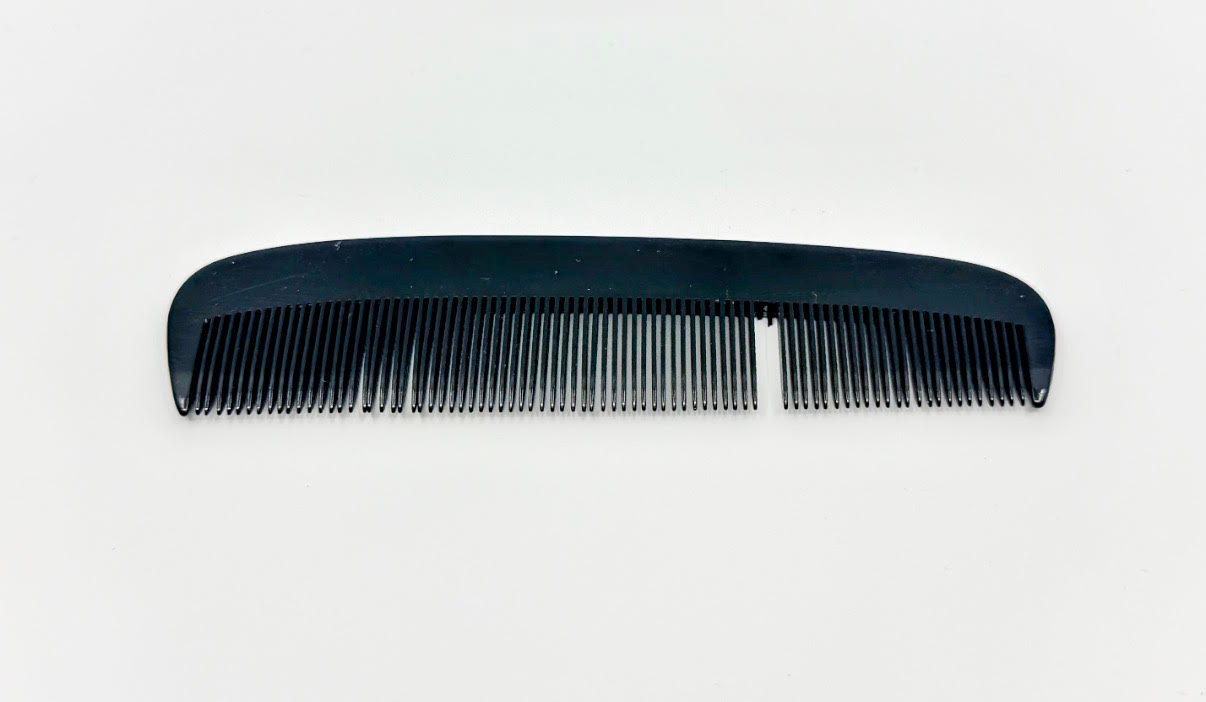
From the outside, it’s a comb. The Germans inspected it, handed it back, and never thought twice about it. The X-ray images sitting next to the comb show what they missed. The bright shape inside the spine is a swinger compass, sealed permanently into the body of the comb at the factory. There was no compartment to open. No threaded cap to unscrew. No way to get to the compass without destroying the comb.
That was the whole point. A POW carried that comb for years and used it every day. To his guards, it was a comb. When the moment came to run, he snapped it in half and pulled out the one thing he needed to point him toward a friendly border.
The comb wasn’t a hiding place for the compass. The comb was the compass.
What you’ve seen so far is the wearable layer of the kit. Things you put on in the morning. Things a man could carry across a continent because they looked like everything else.
Next Friday I'll show you what came in the mail. A cardboard chess pawn with a compass sealed under the cover. And a silk map so quiet a man could open one in a guard tower without being heard.
See you next Friday.
These pieces are part of my private intelligence collection, which I’ve built over decades of hunting down the artifacts that shaped the shadow wars of the 20th century. CIA, KGB, Stasi, OSS, SOE, and French Resistance – the things these agencies left behind tell stories no textbook ever will. Every Friday, I pull something out and tell its story.
If this is your kind of thing, subscribe and share. New artifacts every week.
🕵️ I’ll also be at the International Spy Museum in Washington, D.C. on May 16 for a signing of my new book. Come find me. 👀
Dexter Ingram spent decades inside the national security world collecting what it left behind. He serves on the Advisory Board of the International Spy Museum and is the author of The Spy Archive and National Security Careers, an Amazon #1 New Release.