
The Ones Who Stayed
The government walked away from prevention. These people didn't. Part 6 of 6 in the series: Behind the Mask – White Nationalism, Violent Extremism, and the Fight for America's Future

Last Thursday, I spoke at Homeland Security Today’s 2026 Counterterrorism Threat Assessment panel. The audience was national security, law enforcement, and homeland security professionals – people who do this for a living. They asked about domestic extremist groups. They asked about misinformation and disinformation. They asked about prevention. The experts in the room know what the real threats are, even when the public conversation pretends they don’t.
I told them what I’m about to tell you.
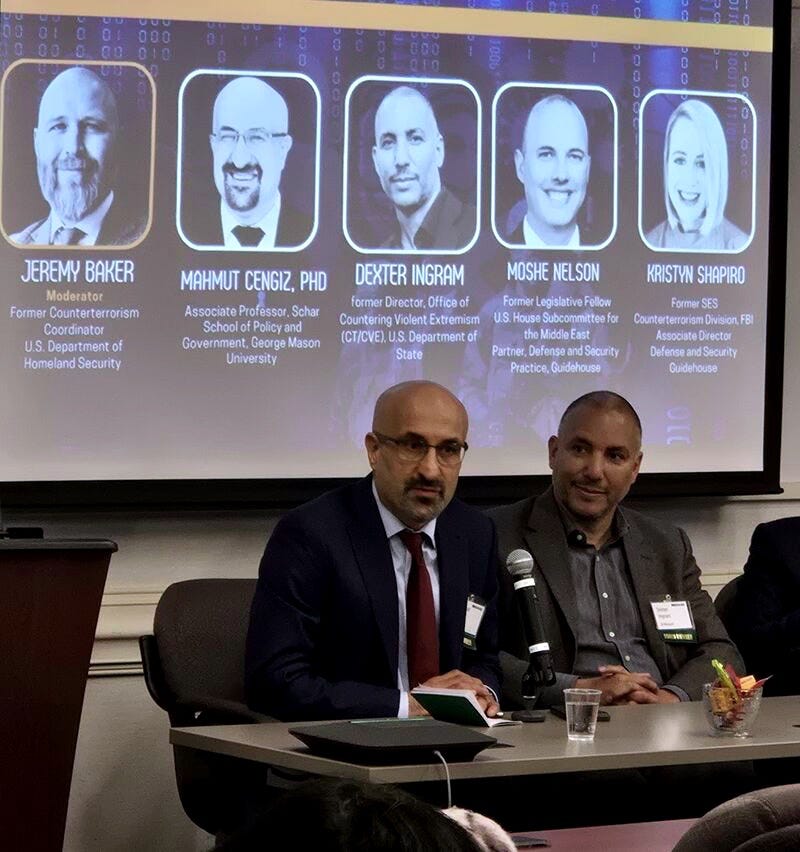
Right now, young men are being radicalized faster than at any point in my career – into white supremacist movements, jihadist networks, the manosphere, incel communities, and ideologies that blend all of them together. The pipeline from angry teenager to violent actor used to take over a year. Now it can happen in months. And the federal system that was built to catch it – the prevention programs, the funding, the coordination – has been gutted.
So when a parent or teacher sees something wrong, they’re on their own. The system that should have been there was taken apart – no explanation, no replacement.
But the work didn’t stop. It moved – to nonprofits running on donations, to state and local teams still showing up, to parents and mentors doing the hardest part themselves. This is about the ones who stayed.
The Way Out
I’ve heard people who left these movements describe what made them get out. Not what you’d think.
A Black coworker showed them kindness. A Jewish neighbor helped them through a rough patch. The experience didn’t match the ideology, and that gap opened a crack. It was slow. It was messy. Over time they got tired of the anger, the paranoia, the constant need to prove how tough they were. A girlfriend threatened to leave. A child asked a question they couldn’t answer. They looked at their life and wondered where it was going.
Mac McKinney spent 25 years as a Marine. He came home from Iraq and Afghanistan hating Muslims. He built a bomb and planned to kill hundreds at a mosque in Muncie, Indiana. But he walked inside first. They welcomed him. They hugged him. They handed him a Quran and told him to come back with questions. He kept coming back. Eight months later he converted to Islam. He became president of the mosque he’d planned to destroy.
McKinney didn’t have a program or a hotline. He had a community that opened a door. Not everyone is that lucky – which is why these organizations matter.
Life After Hate is the only organization in the country doing this at scale. They run a program called ExitUSA – counseling, support groups, connections to services, all free. Their staff includes people who once held the same beliefs as the people they’re now trying to reach. In January 2025 alone, the team spent 91 hours working directly with people trying to get out. One was a teenager writing a manifesto about planned violence. He’s making progress.
Their federal funding was cut in late 2025. They’re surviving on donations.
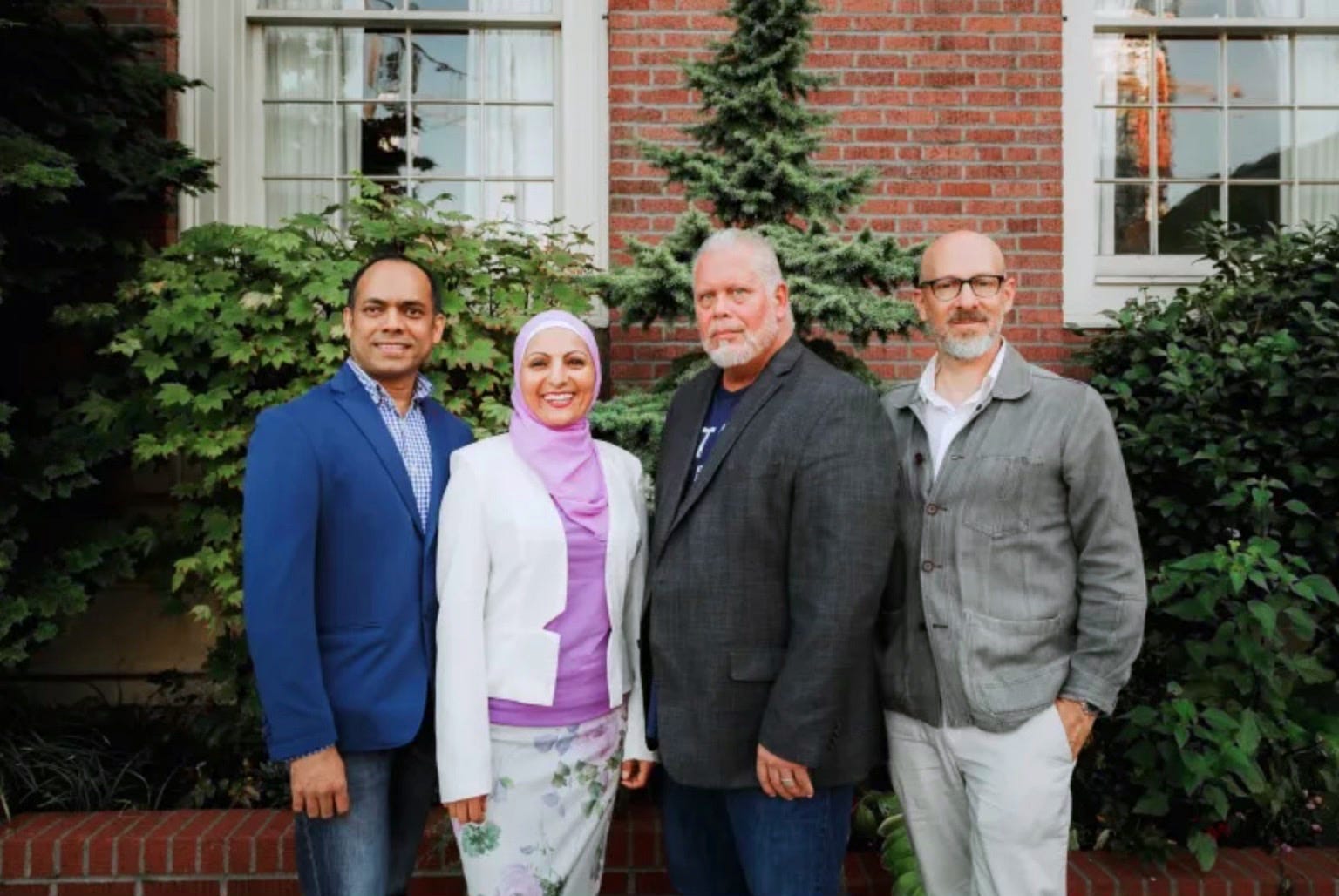
Beyond Barriers does similar work. Jeff Schoep founded it in 2020 after spending more than 25 years running the largest neo-Nazi organization in America. His way out started with a conversation – a sit-down with Daryl Davis, a Black musician from Maryland who has spent 40 years meeting members of the Klan and other hate groups face to face. He’s helped more than 200 people walk away. Many have handed him their robes and hoods.
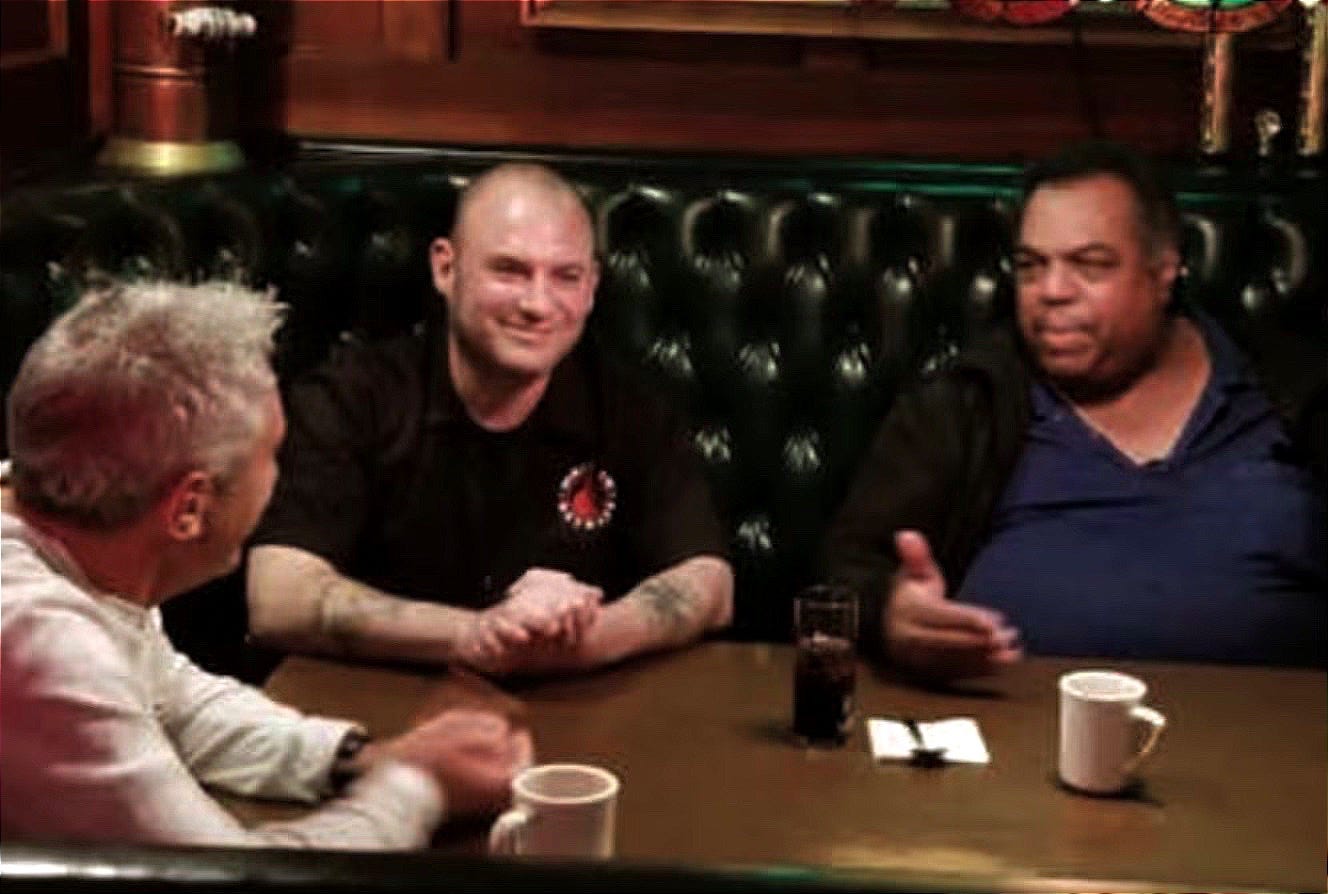
Schoep calls Davis his brother now. A former Nazi leader and a Black musician. That’s what this work looks like when it’s real.
And then there’s Parents for Peace. Melvin Bledsoe founded it after his son carried out the 2009 attack on a military recruitment center in Little Rock. He built what he wished he’d had: a place for families to call when they see someone they love slipping away. Parents for Peace runs the only national helpline for families dealing with radicalization – 844-49-PEACE. Free. Confidential. Not law enforcement.
My friend Mubin Shaikh works with them. Mubin was teetering on the edge of extremism himself. He then went undercover for Canadian intelligence on the Toronto 18 case – one of the biggest terrorism prosecutions in Canadian history. Now he helps families pull their kids back from the edge. He’s got a permanent exhibit at the International Spy Museum, right here in D.C.
These organizations exist. They pick up the phone. They just don’t have the funding or the visibility they should.
What to Watch For
If you’re a parent, a teacher, a coach, a counselor, or a mentor, you’re already in the right position. You just need to know what to look for – and the window is closing faster than most people realize.
Language changes first. Listen for terms like “red pill,” “based,” “soyboy,” “great replacement.” They show up in gaming platforms, meme accounts, and anonymous forums where recruitment starts. They come disguised as jokes – and that’s the point. The pipeline starts with humor and ends somewhere else entirely.
Watch for a kid pulling away from old friends. Talking about how society is rigged against men, or against white people, or about a coming collapse that only the strong will survive. Getting secretive about what they’re doing online. None of these things alone mean your kid is in trouble. But together, they’re worth paying attention to.
Lecturing won’t work. Ask questions instead. Be the person your kid actually wants to talk to. In every prevention case I’ve seen, it came down to one person who showed up and gave a damn. Someone who noticed and said something before it was too late.
A team at American University built a free guide for parents called Building Resilience & Confronting Risk. You can find it on the Southern Poverty Law Center’s website. It’s written in plain language. I’d hand it to any parent with a teenager online – which is every parent.
I also put together a free guide for parents and teachers – 7 Warning Signs Your Kid May Be Getting Pulled into Online Extremism.
What You Can Do Right Now

Support the people doing this work. Life After Hate is at lifeafterhate.org. Beyond Barriers is at beyondbarriersusa.org. Parents for Peace is at parents4peace.org – and if you’re worried about someone, call 844-49-PEACE. These nonprofits are surviving on donations. They’re still going because people decided the work matters enough to pay for it.
Prevention is also happening where the recruiting starts – online. Companies like Moonshot intercept people searching for extremist content and redirect them toward help. The Global Internet Forum to Counter Terrorism brings 39 tech companies together to flag and remove terrorist content across platforms.
Talk about this out loud. Silence helps the recruiters. When communities don’t name the problem, they give it room to grow.
Push your local and state leaders. Sixteen states had prevention plans running before the federal cuts. Some are still going. State and local teams build the relationships that catch these cases early. Your state can start that work – or restart it – without waiting for Washington.
And mentor a young person. The kids who get pulled into these movements are the ones who feel like they don’t belong anywhere. They’re looking for identity and purpose. If the only people offering that are recruiters, we’ve already lost.
If you’re looking for somewhere to point a high school student or young adult, IN Network is a nonprofit I started that connects them to careers in national security – and shows them a world bigger than the one they’re being fed online.
Why I Wrote This

I spent years coordinating global coalitions fighting terrorism and working to counter violent extremism through federal programs and cooperation with state and local governments, the private sector, nonprofits, and partner nations. I know what’s being lost.
But the federal government was never the whole answer. The best prevention I’ve seen worked because it put the weight on communities. Parents and teachers who asked the right questions. Coaches and counselors who noticed something was off. People who’d been in these movements themselves and picked up the phone to say, “I’ve been where you are. Let me help.”
As a dad of two boys, I know the most important work might be the hardest. It’s parents having honest conversations with their kids about what the algorithm is pushing at them and why. That’s where prevention actually lives. At the kitchen table.
The threats aren’t going away. But neither are we.
This is the final part of the series Behind the Mask – White Nationalism, Violent Extremism, and the Fight for America’s Future. To read Parts One through Five, check out the full series:
Behind the Mask: Who They Are, What They Want, and Why They Hide
The Ecosystem: White Nationalist Groups and the Recruiting Machine
The Ecosystem: Christian Nationalism and the Fusion with White Supremacy
Dexter Ingram is a national security professional with more than 25 years of experience. At the Department of State, he served as Director of the Office of Countering Violent Extremism and Acting Director for the Office of the Special Envoy to Defeat ISIS. He is the author of “The Spy Archive: Hidden Lives, Secret Missions, and the History of Espionage.”
If this series has been valuable to you, share it with someone who needs to read it. Subscribe to Dexter Ingram: Declassified – this is the work your subscription supports.