

The Strategy That Forgot the Threat
Sixteen pages. Three threat categories. None of them include the leading source of domestic terrorism deaths in America.

For two years I led the State Department’s Office of Countering Violent Extremism. Until July of last year, I ran the State Department’s team charged with preventing terrorism. We worked with the U.S. interagency and with international partners to prevent attacks by ISIS, al-Qaeda, white nationalist networks moving across the Atlantic, and the nihilistic teenagers on Discord and Telegram who were planning to shoot up schools and synagogues.
We did the work because the threats were real. Because Americans died. Because the FBI, CIA, NCTC, and DHS all said the threats were real, and so did every serious CT service we partnered with from London to Niamey to Riyadh.
This week the White House released its 2026 United States Counterterrorism Strategy. Sixteen pages. I had to read it twice – and I can’t believe we published it.
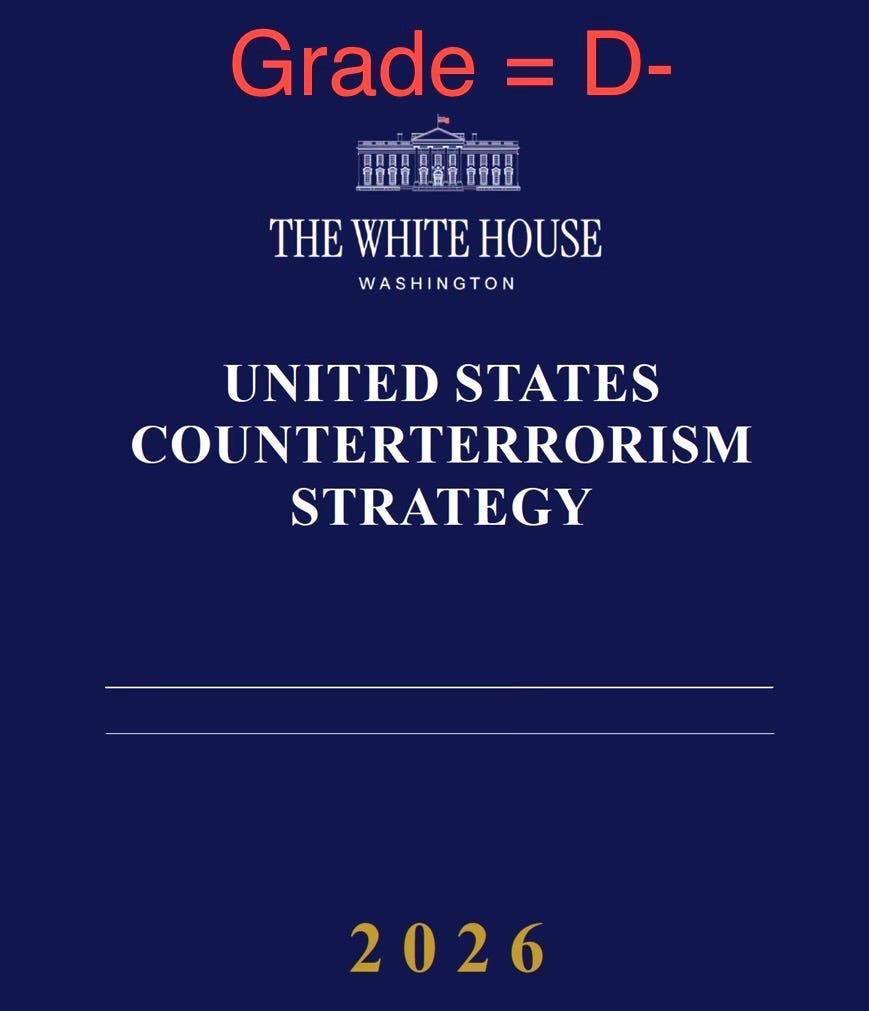
What we published is an ideological pamphlet with a White House seal on the cover.
How a real strategy gets written
A real CT strategy goes through an interagency process. CIA fights for every paragraph. FBI fights for every paragraph. State, NCTC, DHS, Treasury, DOD, NSC – they all do. The lawyers fight harder than anyone. Allies get briefed before publication. Hill staff get briefed. By the time the document drops, you can read it and tell which threats the IC actually prioritizes. The threat sections are written by people who’ve done the work.
That didn’t happen here. You can tell because the sentences read like cable news chyrons. “Violent left-wing extremists.” “Anti-Americanism.” “Anti-Christianity.” Those aren’t analytic categories. They’re talking points dropped into a Word file by people who’ve never done the real work. You can almost hear the group chat that produced it.
I have. Last year, while I was still at State, we were ordered to scrub every reference to January 6th from our counterterrorism training at the Foreign Service Institute. The course where we train American diplomats on what political violence looks like.
Every reference. Gone.
Strategy documents aren’t press releases. They’re how the federal government tells its 100,000-plus security professionals what to work on, tells Congress what to fund, and tells our allies what we’ll show up for. Every word moves resources, opens or closes investigations, and shifts the priorities of every fusion center in the country.
I’ve seen draft strategies come out of the building over the years. The bad ones get sent back. This one got published.
What’s missing
The 2026 strategy names three threat groups: cartels, Islamists, and “violent left-wing extremists.” That’s it. There’s no fourth category for what the federal government used to call REMVE – Racially or Ethnically Motivated Violent Extremism. The label covers white nationalist, neo-Nazi, and other race-based violent movements. None of it made the cut.
Every IC product going back a decade names REMVE as the leading source of domestic terrorism deaths in the United States. Christopher Wray testified to it under oath, repeatedly. DHS said it. GAO said it. The first Trump administration coined the REMVE label and made the first State Department designations against a Russian neo-Nazi group back in 2020. The FBI rolled up cells of The Base – a transnational neo-Nazi network plotting attacks on American soil – before they could pull them off. In 2024, federal agents arrested the leaders of Terrorgram, an American-born neo-Nazi Telegram network whose propaganda inspired mass attacks abroad.
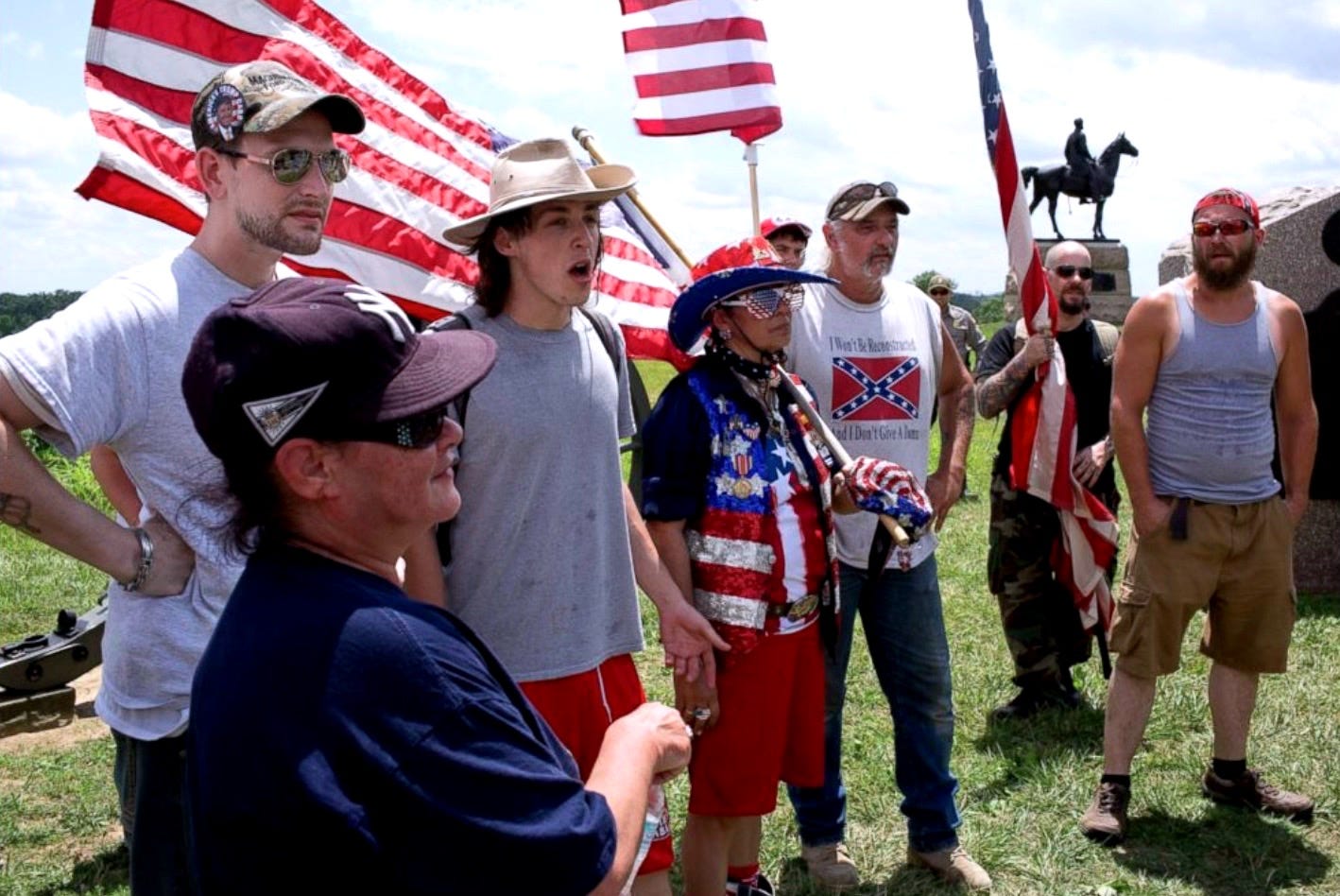
The threat hasn’t gotten smaller. Buffalo. El Paso. Pittsburgh. Allen, Texas. The Proud Boys. The Oath Keepers. January 6th. Same Great Replacement ideology, same online ecosystem, same playbook.
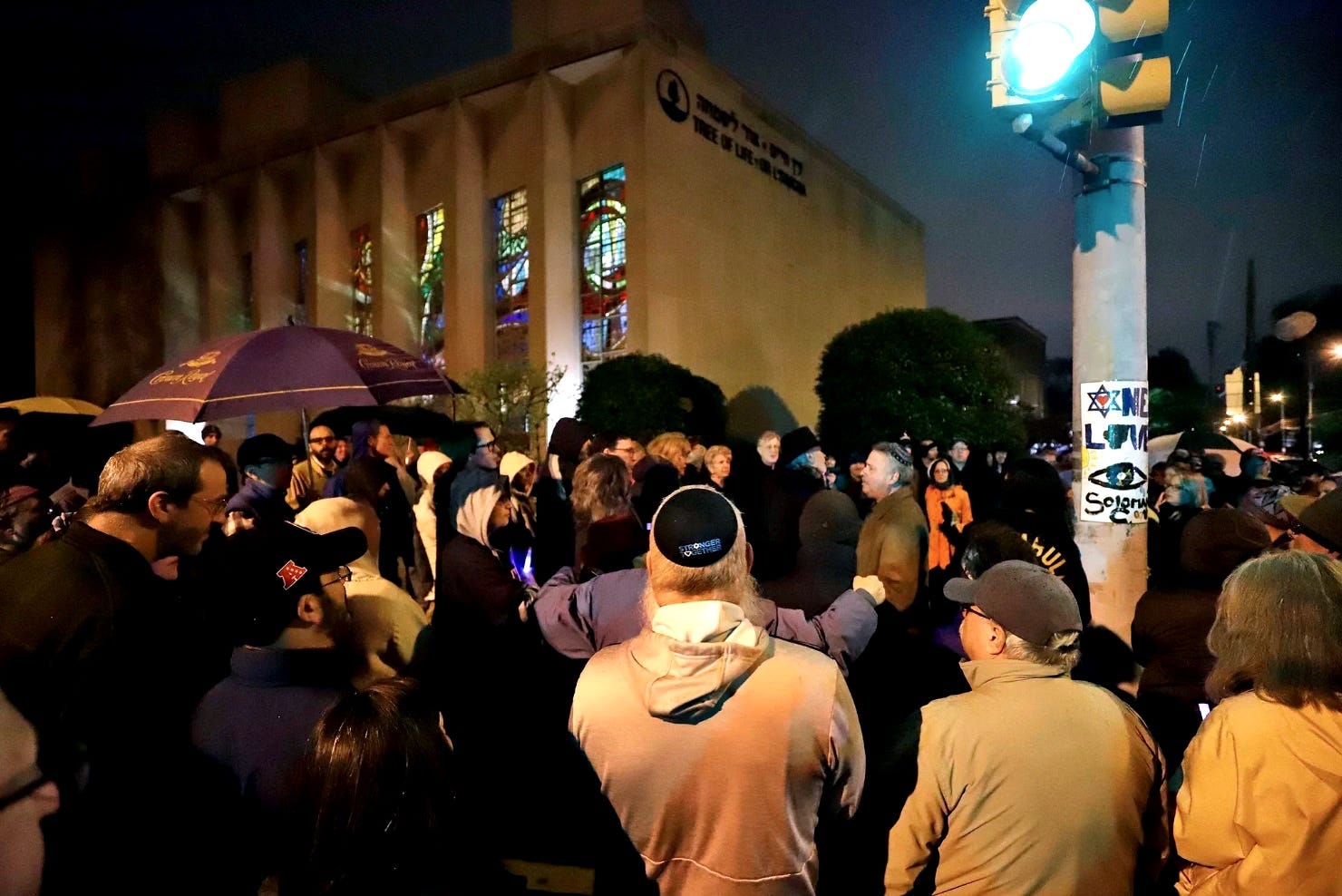
REMVE covers antisemitic violence. Tree of Life. Poway. Colleyville. The synagogue plots the FBI disrupts nearly every year. Jewish communities in America already pay for armed security at preschools, cameras on social halls, and bomb-sniffing dogs at High Holiday services. They built those defenses because the federal government identified them as targets. This strategy tells them the threat they live with every day is no longer a category we're willing to name.
You can’t write that threat out of the strategy. It doesn’t disappear because you stopped saying its name. The networks I used to track are getting more confident. Some of them are wearing our uniforms and carrying our badges. Ask Hegseth. The Pentagon stopped looking last year. Right now, they’re telling each other that the federal government has moved on.
They’ve read the same document we have.
What got named instead
Antifa. Transgender Americans. People who post the wrong memes.
Antifa has no membership rolls, no leadership, no structure. The FBI has said so under multiple directors of both parties. Designating it accomplishes nothing operationally and a great deal politically, which is the point. You can’t put a posture on the State Sponsors of Terror list. You can put it in a campaign ad.
Calling transgender Americans a national security threat – in a CT strategy, the document that signals tasking priorities to every fusion center and federal agent in the country – isn’t counterterrorism. That’s an enemies list with footnotes.
There are violent individuals across the political spectrum. CT professionals investigate them when they cross the line into operational planning. Nobody serious is pretending these cases don’t exist. But there’s a wide gulf between investigating individuals who plan violence and naming an identity group as a class of threat. That difference is the foundation of every post-9/11 civil liberties safeguard we have. The drafters of this document don’t know the difference, and they don’t care.
The CVE bait-and-switch
I remember sitting in West Africa at the first Africa Focus Group of the Global Coalition to Defeat ISIS. The senior representative from Kenya’s National Counterterrorism Center pulled me aside. He told me Kenya had just restructured its national CT strategy around prevention, because they knew they couldn’t shoot or bomb their way out of the problem. Kenya. A country with a fraction of our resources, sitting next to an active conflict zone, had figured out what this document still refuses to admit.
The strategy puts “deradicalization” in scare quotes. Three pages later it demands the federal government build “effective counter-propaganda means to identify and neutralize the media platforms of terrorist groups and identify and locate plotters before they can kill Americans.”
That’s CVE. That’s the prevention work my office did for years. The field gets delegitimized on one page and reissued under a new label on the next. The only thing that’s actually changed is who’s allowed to do it.
What our partners are reading
This is the part that hurts. I spent years sitting across tables from CT directors in London, Paris, Berlin, Madrid, Brussels, Ottawa, Niamey, Riyadh, Amman, Abu Dhabi, Rabat. We argued, disagreed, and rewrote each other’s drafts. But we worked the same problem set because we shared the same threat picture.
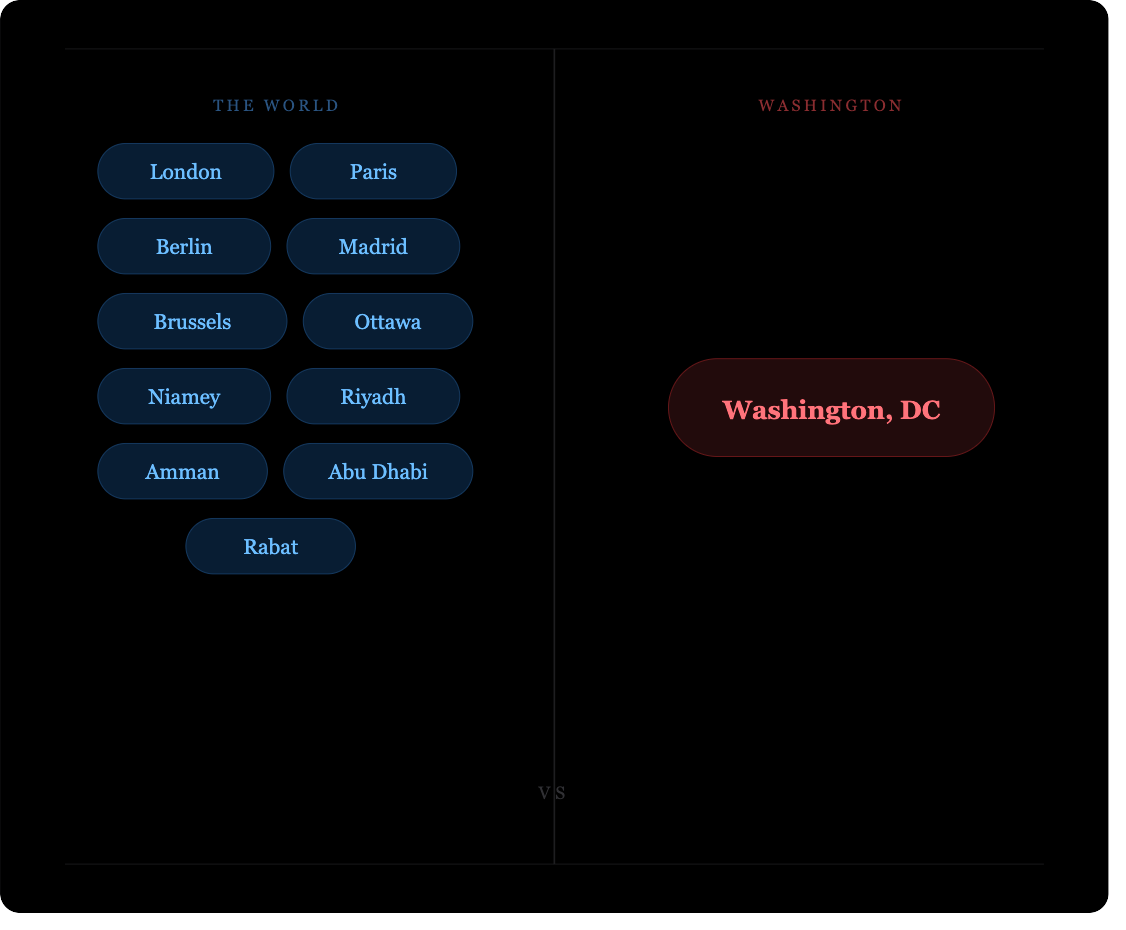
That’s over. Our partners read this document. They saw what got named and what didn’t. They saw a strategy that demands they pick up more of the burden in the Sahel and across Europe while insulting them. They watched NCTC run without a permanent director since March and DHS go silent on national threat advisories since September. They drew the conclusion any professional in their seat would draw.
Our partners now plan around Washington, not with it.
The fight didn’t stop. It just isn’t being fought by us anymore. It’s being fought by the French in the Sahel, by the Brits and Australians on REMVE networks, by Jordanian and Emirati services on the Islamist file. At home, the work has fallen to state and local fusion centers and sheriff’s offices that don’t have the resources or the authorities the federal government used to bring.
We left them holding the bag and called it a promotion.
A CT strategy is supposed to do three things: name real threats, get written by people who’ve done the work, and get briefed to allies before it gets stapled to a podium. This one doesn’t do any of them.
After 30 years in this work – military, FBI, State, DHS, Afghanistan, INTERPOL – I think about the analysts, agents, case officers, and diplomats who’ll have to brief this document to allies and then look those allies in the eye. They didn’t write it, they don’t believe in it, and they’ll spend the next four years cleaning up after it.
This document’s going to cost American lives. The drafters know that. They published it anyway.
Dexter Ingram is a counterterrorism expert with over 30 years in national security. He served as a Naval Flight Officer, led the State Department’s Office of Countering Violent Extremism, and ran the 89-nation Global Coalition to Defeat ISIS. He is the founder of IN Network and author of “National Security Careers: The Ultimate Guide to Breaking In” and “The Spy Archive: Hidden Lives, Secret Missions, and the History of Espionage.”
🕵️ I’ll also be at the International Spy Museum in Washington, D.C. on May 16 for a signing of my new book. Come find me. 👀